
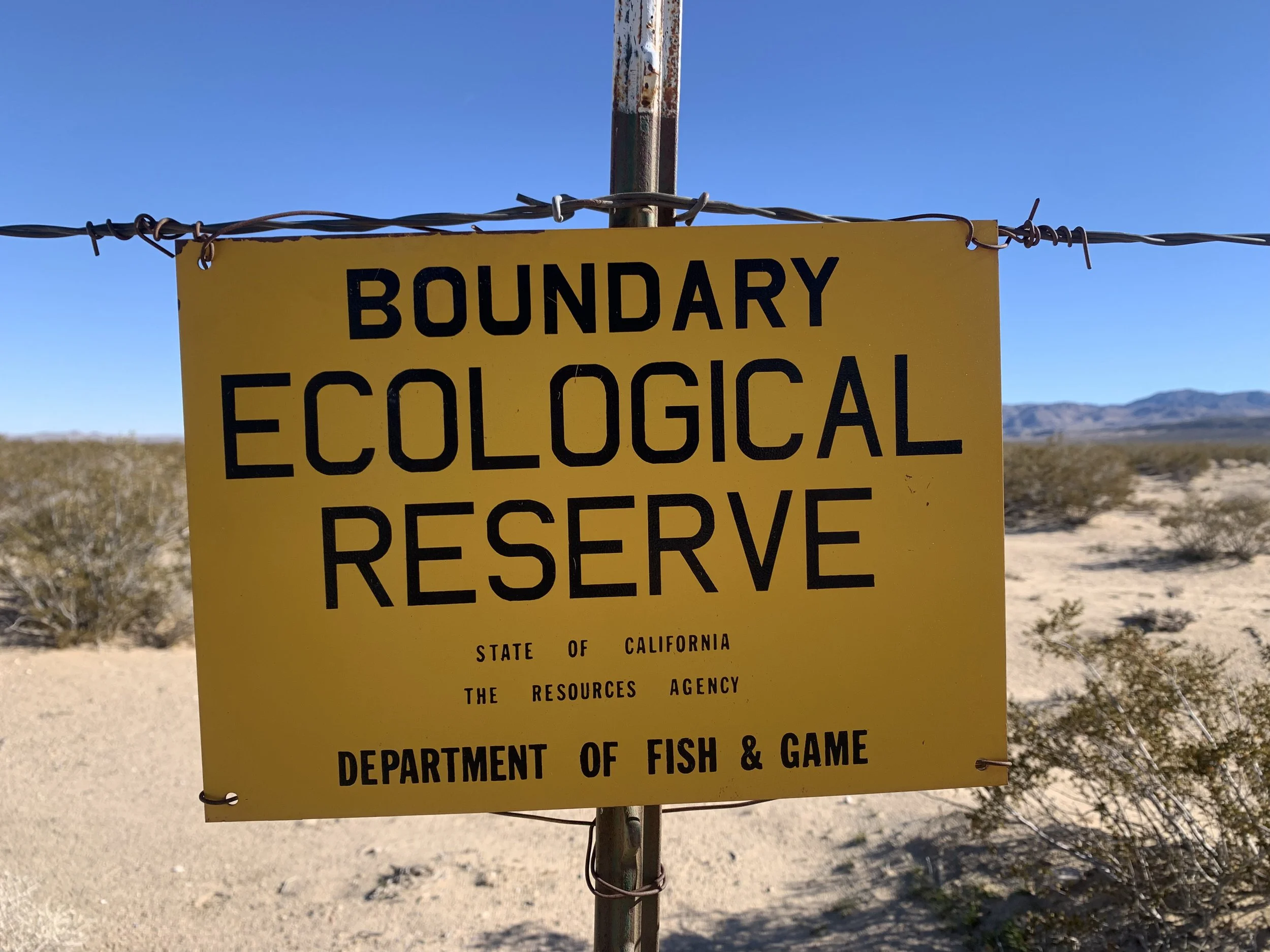
On a clear morning in February, 2024, I’m cruising the highway that runs through the Lucerne Valley in the Mojave desert, looking for an unpaved mining road. Making the turn, I cautiously bounce my city girl Prius a mile down the “waaaaaashbooooard” track before stopping alongside a wire fence marked with a small yellow sign: Ecological Reserve, Department of Fish and Game. I park, eyeing the sandy shoulder, and while I’m pulling out my gear, a pick-up truck bumps to a stop and a window rolls down. “M’am, is everything ok?” I smile brightly at the two men, feeling a bit vulnerable. “Yes, thank you, I’m just here to visit this very special… well, bush.” With a shrug and a wave, the pick-up races on as I close up the car, mumbling under my breath “Prius,” shoulder my bags and step through the fence which, happily, does not say anything about trespassing. Following footsteps a few hundred feet, I recognize a form I’ve been staring at on the satellite view of Google Earth: a potato-shaped ring of low-slung Larrea tridentata, or creosote bushes, about 60 feet in diameter at the widest point. I step gently into the center of the ring and find myself surrounded by one of the oldest living organisms on earth: a clonal plant that’s been alive for 11,700 years, since the end of the last Ice Age—since the age of camels, mammoths, flamingoes and giant ground sloths in the Mojave.
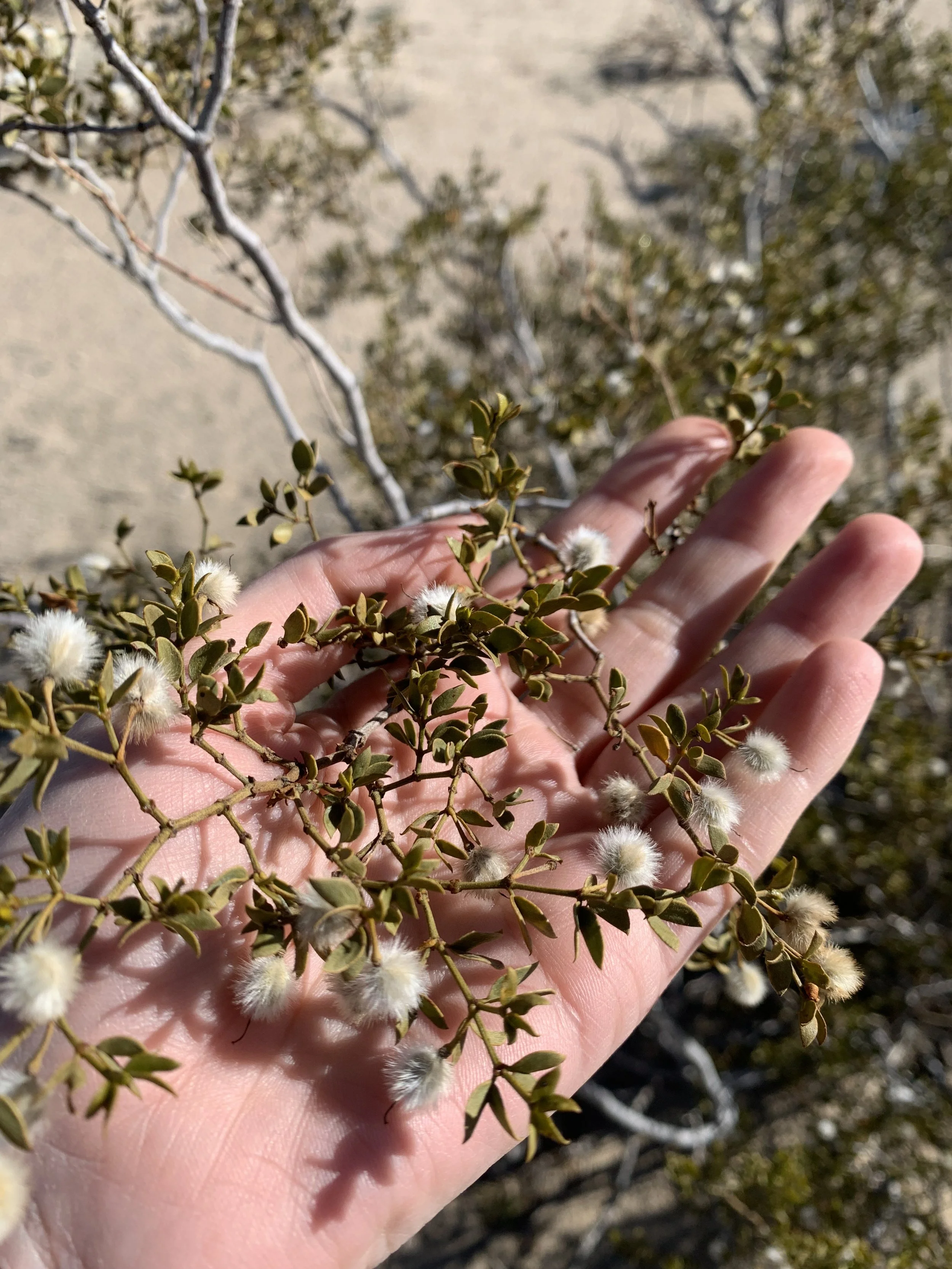
The fuzzy seed pods of blooming creosote, 2024
Creosote scrub is the most ubiquitous habitat of today’s Mojave–a vast place that covers 20% of California as its largest desert. Also, an environment that too often falls victim to the othering mentality of arid landscapes as wastelands to be ignored or exploited as successive waves of outsiders have pleased. Frequently, Indigenous histories receive little more than fly-over reverence as history books intone that “ancient people have lived here since time immemorial,” then move on to the exploits of European ranchers and miners, military uses, and water wars. Cataloging the more-than-human elements, Joshua trees get a mention, and maybe roadrunners and rattlesnakes, before the narrative pivots back to the resources of human economies: gold and silver, borax and imported 20-mule teams.
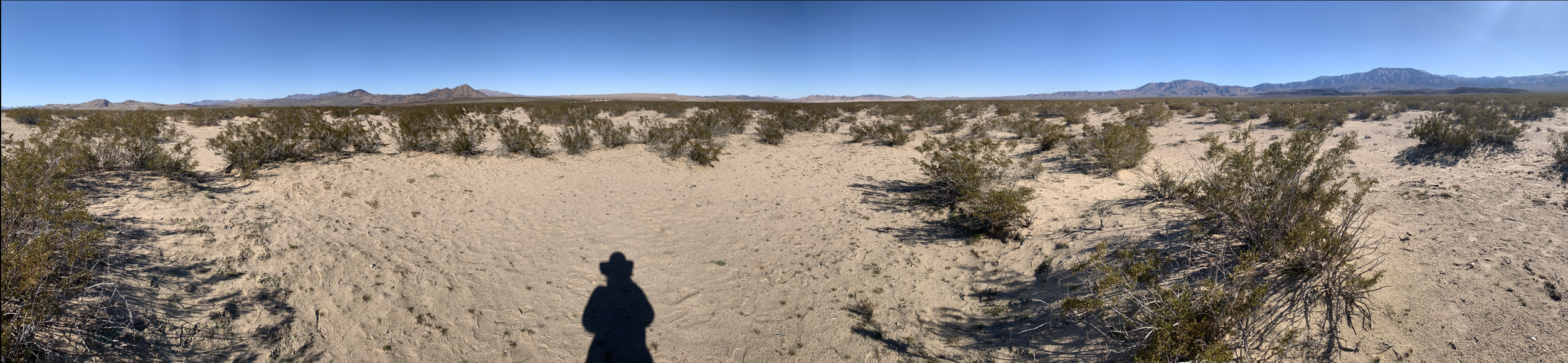
King Clone creosote ring with my shadow the first time I visited, 2024
The land is dry, ecology subtle, life persists underground while our eye bounces off the surface, struggling to really see the picture. That February morning, I gently touch a tiny leaf, green tips on mostly bare branches. I’m in awe of this ring of genetically identical creosote bushes that first rooted thousands of years before the historic era, and continued to grow as every tablet, every hieroglyph, every letter of every alphabet ever written or typed, and of course every photograph, came into the world. Aided by the expressive power of art, could this plant serve as an ambassador of its landscape, offering an entry to deeper understanding of a space filled with expansive wonder—if we find keys to seeing it?
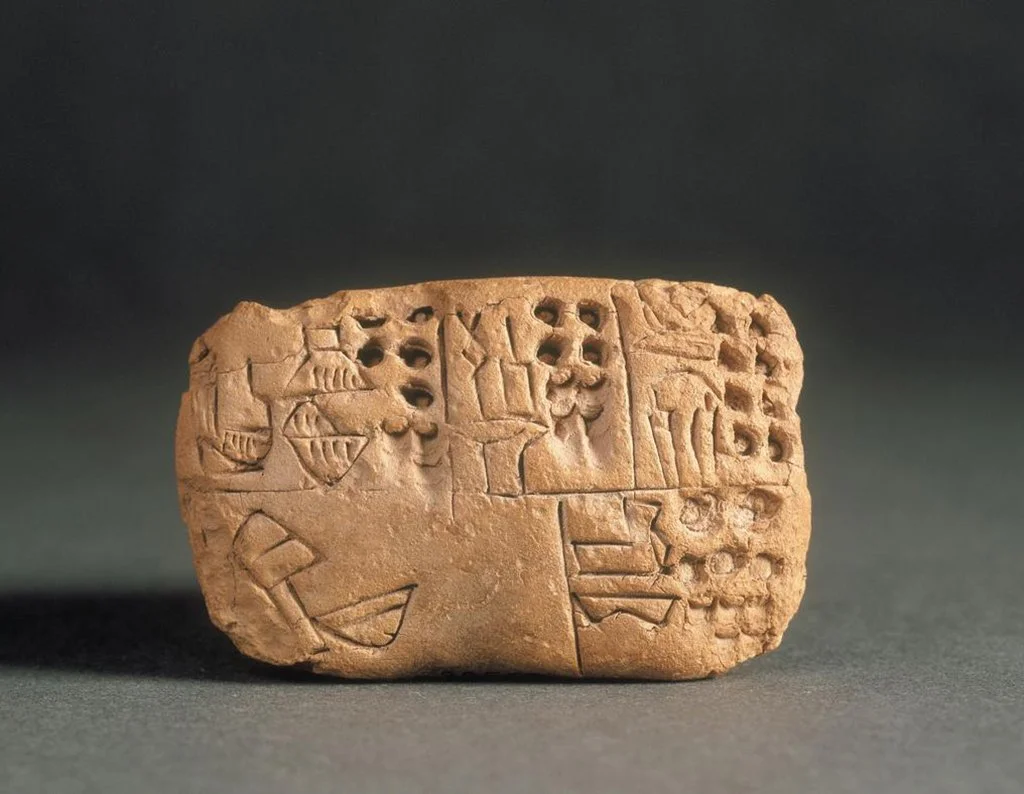
Of course we’re mad for cuneiform tablets, the earliest form of writing developing out of pictographs about 3,500 BCE. At the same time… compared to a nearly 12,000 year old creosote, 5,500 years of human writing suddenly doesn’t seem so old.
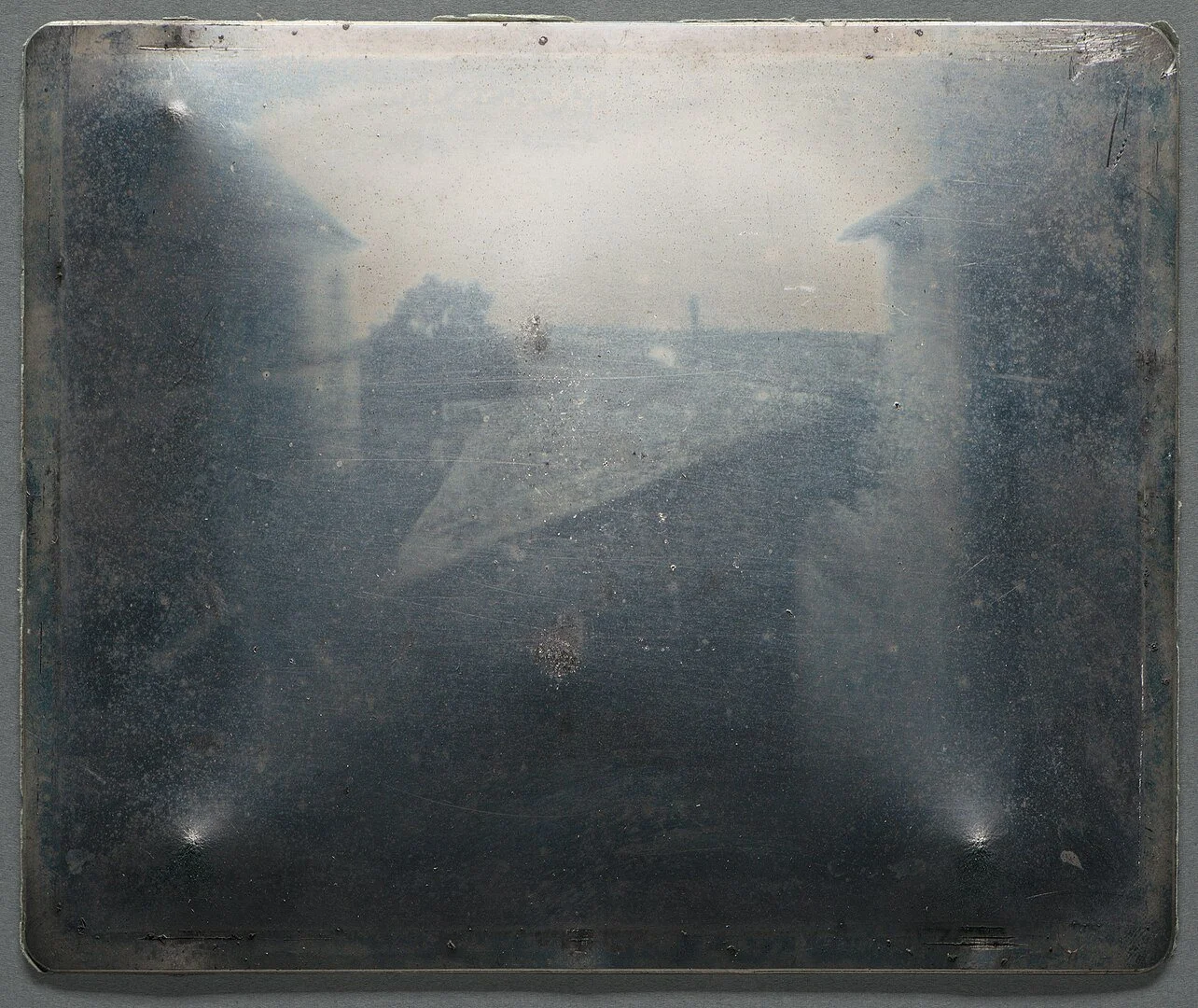
While the oldest surviving photograph from around 1826 by Niepce seems downright newfangled.